Life before Columbus
The Aboriginal Heritage of Trinidad
Life before Columbus – A Glimpse into Trinidad’s First Peoples


Ancestral Echoes
The First Peoples and the Roots of Trinidad’s Indigenous Heritage
Long before Columbus arrived in 1498, Trinidad was home to the First Peoples—Indigenous communities whose traditions, beliefs, and way of life continue to shape the island’s cultural identity today.
Origins & Language Groups
The Indigenous peoples of Trinidad were part of the vast tropical forest Indian culture that stretched from
the upper Amazon basin through Venezuela, the Guianas, and into the Caribbean. They belonged to two major
language families:
- Arawakan: Dominant in the Caribbean, settled, agricultural-based societies
- Cariban: More nomadic, found mostly on the mainland
Due to its close proximity to South America, Trinidad served as the gateway to the Caribbean and was
continuously inhabited for over 6,000 years before European arrival.

Lifestyle & Societies
Trinidad was home to several Indigenous tribes, including the Yaio, Nepuyo, Chaima, Warao, Kalipuna,
Carinepogoto, Carina, and Arauca. These communities:
- Built permanent settlements
- Engaged in farming and trade
- Used Trinidad as a hub in the regional Amerindian trade network
By the time of Spanish settlement in 1592, the Indigenous population was estimated at 40,000 people.

Religion & Spirituality
The Amerindians were deeply spiritual people who worshipped nature and believed in a Great Spirit that
manifested through the earth, wind, water, and animals. Many tribes believed in four spiritual guardians,
aligned with the four cardinal directions.
The Role of the Semichichi (Shaman)
Religious ceremonies were led by the Semichichi or Medicine Man. These rituals involved:
- Prayers, chants, and dancing
- Playing chac-chacs, whistles, and drums
- Using tobacco and special sacrificial knives
- Wearing decorated skirts, beads, and painted bodies
One with Nature
The Amerindians treated all of nature with reverence. Everything was believed to have a spirit. Even
tools like the cassava grater were made from natural materials with care and intention. Their philosophy:
“If you are feeling sad and lonely and there is no one around to comfort you, you could hug a tree instead.”
The Vision Feast
A key rite of passage was the Vision Feast—a period of isolation, meditation, and dreaming in which each
person would receive their name and spiritual symbol.

Conversion to Christianity
In 1785, the populations of Tacarigua, Caura, and Arouca were relocated to Arima to form the Santa Rosa
Mission. This was part of a Spanish effort to centralize and convert the Indigenous population.
The Catholic Capuchin friars attempted to convert the Amerindians, who initially resisted due to their own
rich spiritual traditions. According to oral history, it was only after a mystical experience by three male
community members that conversion gained wider acceptance.

Legacy in Arima
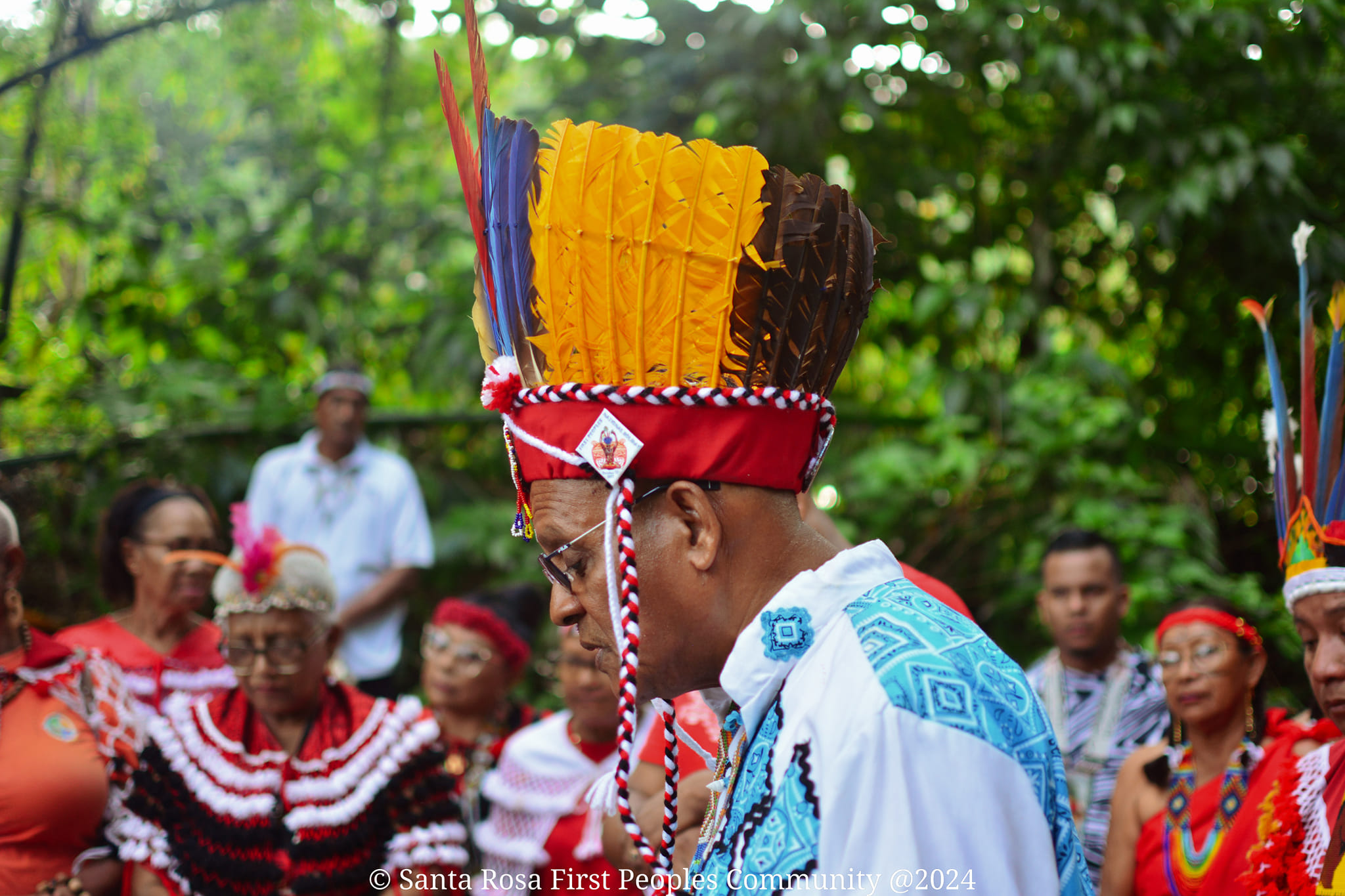
The modern town of Arima was born out of the Santa Rosa Mission. The descendants of those early Indigenous
peoples now form the Santa Rosa Carib Community—the last remaining organized Indigenous
community in Trinidad.
They continue to celebrate their heritage through cultural events, especially during Santa Rosa Day,
and preserve oral histories, crafts, and traditional knowledge passed down through generations.

Explore More of Trinidad’s Indigenous Heritage
Visit the Santa Rosa First Peoples Community Centre or join us for our annual Heritage Day celebration.