
Our History

An Enduring Legacy

Our history is not a relic of the past; it is a living, breathing legacy of resilience, a sacred connection to this land, and a story of a sovereign people who have endured. This is the story of the Santa Rosa First Peoples Community, the descendants of the first hands to shape this land, the first voices to sing its songs, and the first hearts to call it home.

Clay pots
Woman speaking on mic
Man blowing sea shell
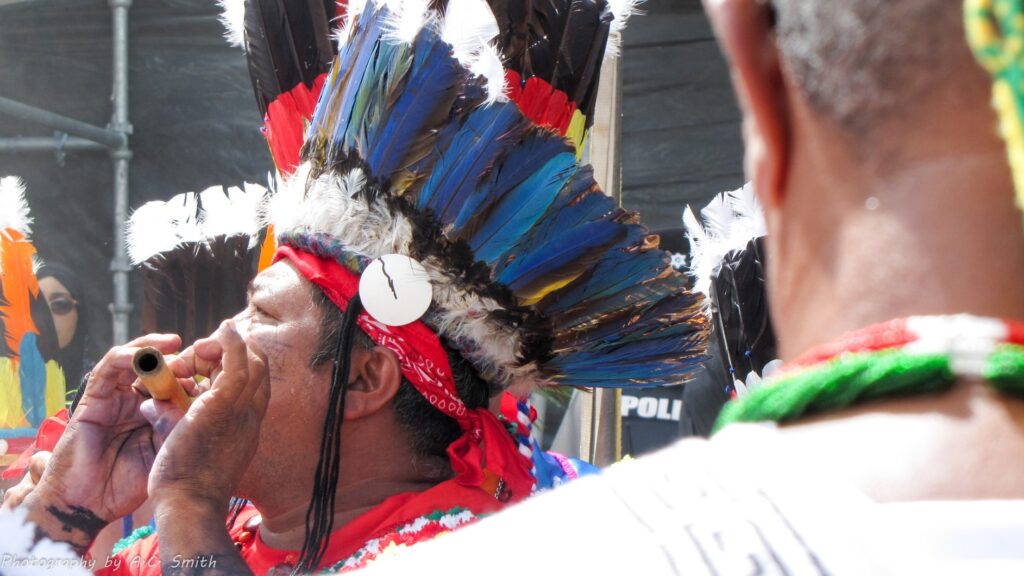
Man blowing flute
  • Life Before Contact

    A Thriving World

    For thousands of years before the arrival of European ships, our ancestors lived in a harmonious, self-sufficient society. This island was a vibrant nexus of peoples, including the Nepuyo, Lokono, Kalinago, and others, who thrived in villages and towns across the land. Our society was complex, built on deep kinship ties, extensive trade networks that connected Iëre to the mainland, and a profound spiritual relationship with the natural world.

    We were skilled agriculturalists, cultivating cassava, maize, and sweet potato. We were expert navigators, traversing the sea in magnificent canoes. We were artisans, weaving intricate cotton and creating pottery that was both beautiful and functional. Our lives were guided by the wisdom of our shamans and the leadership of our chiefs, or Caciques. This was not a wilderness, but a well-ordered world, rich in culture and tradition. The spirit of Iëre was one of abundance, community, and deep-rooted identity.
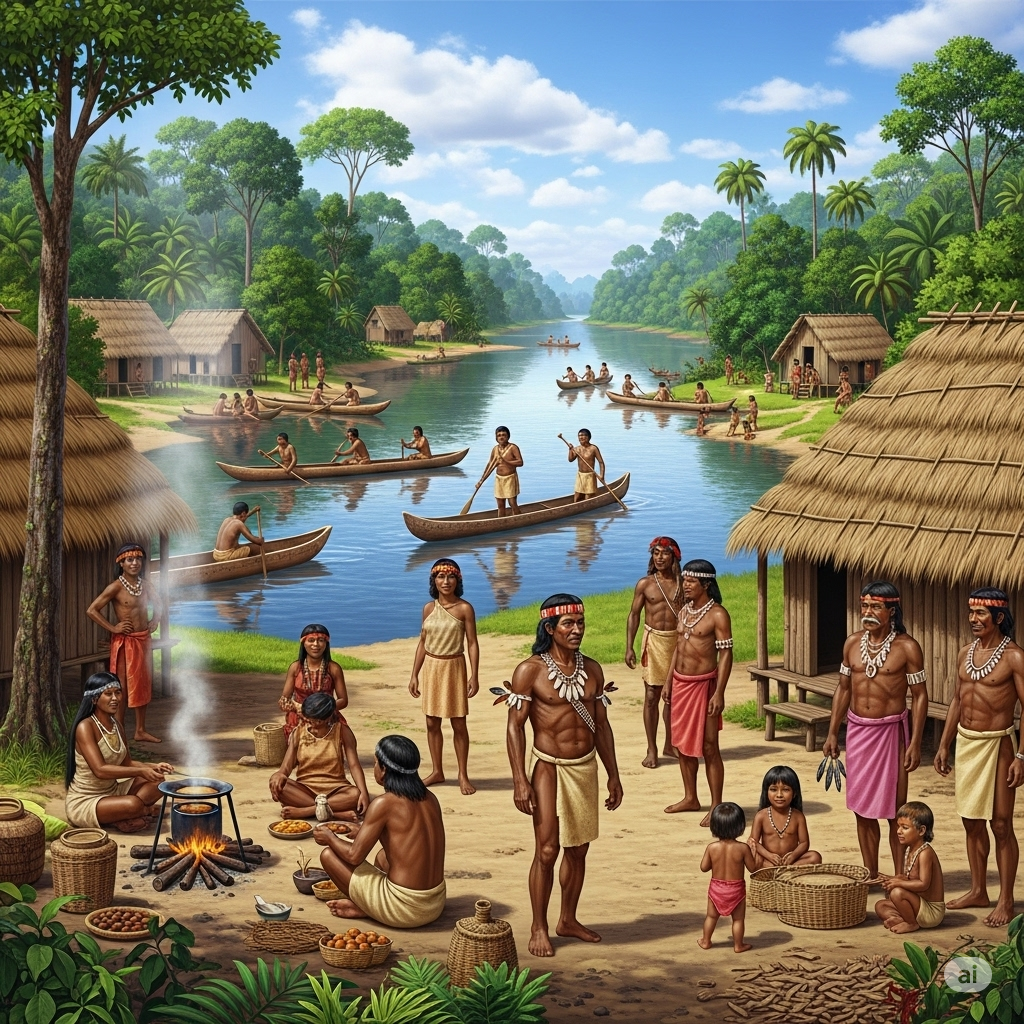
    Life before contact
  • The European Encounter

    The Arrival of the Spanish

    In 1498, our world was irrevocably altered. The arrival of Christopher Columbus and his ships marked the beginning of a catastrophic period for our people. While the Spanish did not establish a permanent settlement until 1592 with San José de Oruña (St. Joseph), their arrival unleashed forces of violence and disease that our ancestors had never known.

    The Spanish Crown instituted the encomienda system, a thinly veiled form of slavery. Our people were forced from their lands and compelled to labor in Spanish fields and mines under brutal conditions. In exchange for this forced labor, they were to be converted to Christianity. This system, coupled with the introduction of devastating new diseases like smallpox, led to a staggering decline in our population. It was a period of immense loss, not just of life, but of land, freedom, and autonomy.

    The european encounter
  • The Fight for Freedom

    Hyarima's Rebellion

    Our ancestors did not passively accept their fate. The history of this era is also a history of fierce resistance. From the heart of our communities rose leaders who fought to defend our people and our way of life.

    The most celebrated of these figures is the great Nepuyo Chieftain, Hyarima. In the 17th century, he established a base in the central part of the island and led a powerful, decades-long rebellion against the Spanish. Forming strategic alliances and leading raids on Spanish settlements, Hyarima became a symbol of defiance and a beacon of hope. His actions, and the resistance of countless unnamed warriors, are a sacred part of our story. They prove that even in the darkest of times, the spirit of our people could not be extinguished. This fight for sovereignty continues in our blood and in our modern-day struggles for recognition.

    The fight for freedom
  • Survival Through Adaptation

    A New Home

    By the late 17th century, Spanish strategy shifted from outright warfare to control through religion. Capuchin missions were established to convert the remaining First Peoples to Catholicism and consolidate their populations. This period marked another painful chapter of forced assimilation, but it also became an unlikely vessel for our survival.

    Between 1784 and 1786, the remnants of our people from across the island were forcibly relocated to the Mission of Santa Rosa de Arima. Here, we were settled on lands granted to the community. While this removed us from our ancestral territories, it gathered our people together, allowing us to maintain a semblance of community. It was within the mission walls that our ancestors began to blend our traditions with Catholic practices, a form of cultural adaptation that allowed our core identity to survive. The Santa Rosa Festival, our most important annual celebration, was born from this syncretic history, forever tying the story of our survival to the town of Arima.

    Survival through adaptation